
Voronezh Regional Art Museum. I.N. Kramskoy
Voronezh Regional Art Museum. I.N. Kramskoy

+7 (473) 255-38-67


Архив постов: September 2017
Falcone Etienne Maurice
September 22, 2017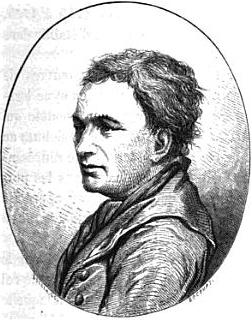
01.12.1716 – 24.01.1791
On this day 300 years ago a great French sculptor was born, the author of the monument to Peter I, known as the “Bronze Horseman”, in Petersburg, Etienne Falcone. Bold technical and composition decision makes the monument one of the best works of its time.
He was born in a carpenter’s family, and his first uncle was Nicolas Guillaume, a marble professional.
In 1753, Etienne Falcone won the competition for the reconstruction of the church of St. Rocha, this work lasted for 10 years. Of the eight sculptural groups, only one “Prayer for the Cup” has survived, the rest of the works were lost in the years of the French Revolution.
Subsequent decade Falcone worked a lot and fruitfully, marble statues and sculptural groups, for example, “Pygmalion and Galatea”, “Thundering Cupid” created at that time, brought him wide fame. However, the grace and grace of the Rococo style sculptures performed by Falcone did not go against realism. Playful and touching, tender and timid, the statues not only have character, but are devoid of excessive pretentiousness, and impressive touching simplicity.
In 1766, Etienne Falcone, at the invitation of Catherine II, went to Russia. He was flattered by the scope of the order, the opportunity to create a horse monument to Peter I, inspired the sculptor. The sketch of wax was made back in Paris, and already in Russia the maestre began work on a plaster model in full size statues. Falcone refused allegorical interpretation, Peter I pacifying the horse, “stretches his right hand over his country.” In his gesture, a proud landing and a turn of his head, the royalty and approval of the state will be felt. At the suggestion of the sculptor, a laconic inscription “Petro primo Catharina secunda” (“Peter the Great, Catherine II”) was knocked out on a pedestal. Monument to Peter I was opened on August 7, 1782, but the sculptor left Russia much earlier – in September 1778.
The monument to Peter I was the last major work of the sculptor. In 1781, he was paralyzed, and the last 10 years of his life he could no longer create. Etienne Falcone died in Paris on January 24, 1791.
Leighton Frederick
September 25, 2017
03.12.1830-25.01.1896
185 years ago, on December 3, 1830, an outstanding representative of academic painting Frederic Leighton was born. His father, Edward Leighton, taught medicine, and his grandfather, Sir James Leighton, was a court physician of the Russian Emperor Alexander I.
As a child, Frederick Leighton had to travel a lot around Europe. Beginning to study painting at the age of ten in Rome, later he continued his studies and began to study painting at the age of ten in Rome, and later continued in London, Dresden and Florence.
In 1855, Frederick Leighton completed the picture, with which his great success began. “Madonna Cimabue” not only received the Royal Academy award, but was also acquired by Queen Victoria.
In 1860 the artist settled in London. In 1868 Frederick Leighton became an academician of the Royal Academy of Arts, and in 1878 – its president. In 1878 he received the nobility, and in 1895 – the title of Baron. The day before his death in 1896, the painter was granted the title of lord.
In his painting, Leighton always adhered to the principles of academicism, preferred subjects on mythological themes. His paintings are distinguished by the high skill of the painter and draftsman.
On January 25, 1896, Leighton passed away. The coffin with the body of the master was exhibited at the Royal Academy, and on February 3 the artist was buried with all honors in the London cathedral of St. Paul.
Adolf von Menzel
September 25, 2017
08.12.1815 – 09.02.1905
Today marks 200 years since the birth of the German painter and graphic artist Adolf von Menzel. He was born in Breslau (now Wroclaw, Poland), but in 1830 the family moved to Berlin. The first steps in art the future artist made under the guidance of his father – he owned a lithographic studio. For half a year he attended painting classes at the Berlin Academy of Arts, but his early death did not allow his father to complete his education, already in 1833 Adolf von Menzel became virtually the breadwinner of the family.
In Germany in the first half of the nineteenth century, fragmented into small principalities, great social transformations were brewing, which resulted in the revolution of 1848. This period of social progress, which Heine called “in the spring,” in the fine arts was expressed in the struggle for the formation of national realistic art. The greatest importance in the development of realism in Germany was the Berlin art school.
In his paintings, Menzel sings the beauty of everyday life, very realistically and even a little detached, fixes the life and life of their models, whether they are workers (“At the construction site”, “Masons at the construction site”, “Leaf for Heckmann”) or courtiers (“Break between dances “,” Lunch at the ball “).
The graphic heritage of Menzel, probably never parted with a pencil, is huge: only the National Gallery in Berlin stores over five thousand of his drawings. He worked in various techniques, and along with preparatory drawings, Menzel has many graphic works that are of independent significance.
Engaged in Adolf Menzel and book illustration, having played a significant role in the development of the art of the German book of the XIX century. Particularly worthy of note is the enormous work of the artist in illustrating the “History of Frederick the Great” F. Kugler, for which he created four hundred drawings. These works not only influenced the rise of national identity, but also influenced the addition of the aesthetic stylistics of the Russian art association “World of Art”.
The art of Menzel was recognized far beyond Germany. The largest Russian critic V. Stasov called him “one of the greatest artists”.
Personal exhibition of Sergei Gulevsky (6+)
September 28, 2017October 5, 2017 at 16-00 on the third floor of the main exposition of the museum will open an exhibition of paintings and graphics member of the Union of Artists, Honored Worker of Culture of Russia, corresponding member of the Russian Academy of Arts, director of the Voronezh Art School Sergei Gulevsky.
At his next solo exhibition, the artist will present about fifty works written in oil and watercolor. Among them there are very early works of the 1970s, while others are executed in 2016-2017. Such a range allows us to fully follow the creative evolution of the author, striving to achieve maximum expressiveness with the inherent laconicism of formal techniques in harmonious color resolution.
The exhibition will last until November 5, 2017.
The entrance fee for all categories of citizens is 50 rubles. Photo, video – for free.
Kandinsky Vasily Vasilyevich
September 25, 2017
16.12.1966 – 01.12.1944
December 16, 1866, was born pioneer of the avant-garde, an amazing artist and theorist of art, Vasily Kandinsky. One of the founders of abstract art, the author of several literary works on art thanks to the power of his talent was able to change the idea of painting, change the course of development of world art forever.
The future artist was born in a well-to-do family, his parents predicted his lawyer’s career, and Kandinsky, having graduated from the law faculty, began his teaching career, which was developing quite successfully. But interest in painting never faded, and at the age of 30 Vasily Kandinsky decides to change life abruptly, leaves teaching and goes to Munich, to private art school of Anton Azhbe, and then continues his studies at the Munich Academy of Arts. In his paintings, even in such an early period, there is a noticeable interest in color, boldness and ambiguity of compositional construction. In 1901, Kandinsky organizes in Munich the “Falanga” society, in which he opens a school, where he teaches himself. During this period, he not only writes and exhibits a lot, but also actively engages in research, creates a book “On the spiritual in art”, as well as memoirs and a collection of poems.
With the outbreak of the First World War, Kandinsky returned to Russia and became an active participant in the socio-political life of the country. After the revolution, the artist is engaged in the development of museum reform, writes articles, participates in the organization of provincial museums, teaches at Free Workshops, and then in Vhutemas. But his ideas about the principles of abstract art have no support, and in 1921 Vasily Kandinsky left Soviet Russia.
Returning to Germany, he receives the post of the head of the workshop of wall painting in Weimar in the Bauhaus (Higher School of Construction and Artistic Design), continuing not only to draw, but also to write theoretical works, for example, “Point and line on the plane.” In 1925, Kandinsky moved to Dessau, where he continued to work and teach. The idea of abstract art was not accepted by the German government, calling it “degenerate,” Kandinsky left Germany in 1932, moving to Paris, where he spent the last years of his life. He died on December 1, 1944 in the suburbs of Paris, and failed to gain popularity in France.
Bryullov Karl Pavlovich
September 25, 2017
23.12.1799 – 23.06.1852
Karl Bryullov was born on December 12 (23), 1799 in St. Petersburg in the family of a teacher in the class of ornamental sculpture of the St. Petersburg Academy of Arts, woodcarver, master of miniature painting and engraver Pavel Ivanovich Bryullov. Father contributed to the training of the boy of painting and drawing, and already in 1809 Bryullov was enrolled in the Academy of Arts.
A multi-talented student, Karl Bryullov, after graduation, he received pensioners abroad and from 1823 to 1835. lived in Italy, where he was carried away not only by religious or mythological themes, but also wrote several genre scenes, to which the work of 1823 “Italian Morning” can be attributed. This picture received flattering reviews. The Society of the Encouragement of Artists presented this painting to Alexandra Feodorovna, the wife of Nicholas I. The Emperor wanted to get a pair picture, and Bryullov wrote “Italian Noon” – one of the most famous and widely cited works.
After visiting the site of excavations in Pompeii and Herculaneum in 1830, Bryullov begins work on the painting “The Last Day of Pompeii”. This work, the majestic and pathos “picture-catastrophe”, kindred in spirit to the masters of romanticism – Gericault, Turner, made a furor not only in Italy, but also at home.
Karl Bryullov returned to St. Petersburg in 1836 and headed the historical class of the Academy of Arts. In addition to teaching, Bryullov shows himself as an unsurpassed master of portrait. His brushes belong to both the ceremonial portraits of the Russian nobility and the chamber ones, which reveal the image of the model more deeply.
In 1837, a portrait of Alexandra Feodorovna was painted, which is now in the Voronezh Regional Art Museum named after. I. N. Kramskoy. This work is a sketchy character, completely written in a sketch just a head. This is not the only portrait of this kind, Bryullov did many sketches for the unrealized group portrait of the family of Nicholas I.
On the recommendation of doctors Karl Bryullov left Russia in 1849, returning to Italy he loved. The artist died and was buried in Rome in 1852.
Sadovnikov Vasily Semenovich
September 25, 2017
28.12.1800-26.02.1879
December 28, 1800 was born a famous watercolorist and draftsman Vasily Sadovnikov. He can be called a chronicler of Petersburg. In his watercolors and lithographs, he reflected the life of the Russian capital from Pushkin to Dostoevsky.
Vasily Sadovnikov was a serf duchess Natalia Petrovna Golitsyna. Only after her death, already being a famous artist, he got free. Vasily Sadovnikov was self-taught, but, apparently, a certain influence was exerted on him by Peter’s elder brother, who was given to the training of AN Voronikhin, a well-known architect and academician of perspective painting.
In 1823 – 1827, Sadovnikov participated in the coloring of lithographed views of Petersburg and the surrounding areas, published by the Society for the Support of Artists. This work not only promoted the original artist in the creative plan, but also allowed to get acquainted with other artists and lithographers who later played a role in his life.
One of the most famous works of the artist, “The Panorama of Nevsky Prospekt”, originally made in watercolors almost 16-meter long and released by the publisher AM Prevost series of 30 sheets, delighted contemporaries. His works are filled not only with documentary accuracy, but also with an amazing poetic mood and love for his native city.
During his long life, Vasily Sadovnikov traveled extensively throughout Russia, visited Moscow, Revel, Vilno, Helsingfors, Novgorod and Tambov.
Sadovnikov died in St. Petersburg, in 1879, and was buried at Mitrofanyevsky cemetery, however, the grave of the artist has not survived to this day.
Rossi Karl Ivanovich
September 25, 2017
29.12.1775-18.04.1849
December 18, 1775 was born one of the great architects of St. Petersburg, an outstanding Russian architect of Italian origin, Carl Rossi. He was born in Naples, but at the age of 12 he came to Russia with his mother, the famous Italian ballerina Gertrud Rossi, and stepfather. Architect Vincenzo Brenna, who often visited Italian artists, became interested in a talented boy, becoming his first teacher. When in 1795 Brenna broke his arm, he took the draftsman of a young Charles Rossi.
After Paul I ascended to the throne, the construction of the Mikhailovsky Castle begins, the project of which was initially entrusted to the architect Vasily Ivanovich Bazhenov, and later transferred to Brenna. Work as a draftsman during the construction of the Mikhailovsky Castle was the first serious architectural practice for Charles Rossi.
Carl Rossi in 1811 becomes a member of the council for the improvement of Tver, where he designs the theater, the provincial chancery, the seminary, the hospital, the shopping arcade, the Church of the Three Hierarchs, the Cathedral of the Cross Exaltation Monastery. In addition, he designed the cathedral in Torzhok, the buildings of the places of interest in Staritsa, the drawing-room yards in Bezhetsk and Rybinsk. The early works of Rossi in St. Petersburg and its environs include the reconstruction of the Anichkov Palace in 1816, a number of pavilions and a library in the Pavlovsky Palace, the Elagin Palace with greenhouses and pavilions.
Nevertheless, Rossi became famous for creating urban architectural ensembles – the ensemble of the Mikhailovsky Palace with a garden and square, the ensemble of the Palace Square with the headquarters building and the triumphal arch, the Senate Square with the buildings of the Senate and the Synod, Alexandrinsky Square with the buildings of the Alexandrinsky Theater and the new building of the Imperial Public Library.
A harmonious combination of architectural forms and volumes, a unique vision and the ability to organize space, innovative constructive techniques – all this allowed Carlo Rossi to create a new face of Petersburg, grandiose and monumental.
Entering into a conflict with the environment of Nicholas I, Rossi retired in 1832, resigning “from all classes on buildings.” One of the last buildings of Rossi was the bell tower of the St. George’s Monastery near Veliky Novgorod.
Watteau Jean Antoine
September 22, 2017
10.10.1684 – 18.07.1721
The special poetic charm is distinguished by the paintings of Antoine Watteau, the lightness and plasticity, the special refinement of the color and the decorative characteristic of his works, served as the basis for the addition of the Rococo style.
Antoine Watteau was born on October 10, 1684 in the family of an ordinary carpenter. Father did not have sympathy for the artistic inclinations of his son, although he allowed him to be a disciple of the city artist Jacques-Albert Guérin. When Antoine was eighteen years old, in 1702, he left home and went to Paris, where he settled himself as a copyist. It was hard work, for a small payment, the earned money was barely enough for food.
Biography of Antoine Watteau changed her course in 1703 due to her acquaintance with Claude Gillo. The latter made out the potential of the young artist and offered him the status of a pupil. In the period from 1708 to 1709 Watteau studied with Claude Odran. Communication with these artists has prompted interest in theater and decorative art. A great influence on the work had the works of Rubens, which Antoine studied in the Luxembourg Palace.
Wanting to get to Rome, Antoine Watteau decides to enter the art academy and in 1717 wrote one of his best works – “Pilgrimage to the island of Kiefer”. For this work, he receives a special title “artist gallant festivities.” No less famous is the painting “Capricious Man”, written in 1718. The essence of the scenes of the artist’s paintings is revealed not only by a direct plot, but mostly by the subtlest poeticness, to which they are imbued.
At the end of 1717, Watteau became ill with tuberculosis, in those days it was a death sentence. The disease was reflected in the sadness of his work. For some time he tried to resist, even visited the UK in late 1719 to change the climate. The last days of Antoine Watteau spent in his friend’s country house, he died of illness July 18, 1721. For his 37 years he left to descendants about twenty thousand pictures.
At the end of 1717, Watteau became ill with tuberculosis, in those days it was a death sentence. The disease was reflected in the sadness of his work. For some time he tried to resist, even visited the UK in late 1719 to change the climate. The last days of Antoine Watteau spent in his friend’s country house, he died of illness July 18, 1721. For his 37 years he left to descendants about twenty thousand pictures.
Roerich Nikolai Konstantinovich
September 22, 2017
09.10.1984 – 13.12.1947
Nicholas Roerich is known not only as an amazing painter, but also as a stage designer, traveler, archeologist, writer and philosopher. His creative heritage is huge – more than seven thousand paintings scattered all over the world, numerous literary works – books, essays, articles, diaries.Roerich Nicholas Roerich
The artist was born October 9, 1874 in St. Petersburg in the family of the famous notary Konstantin Fedorovich Roerich. After graduation from the gymnasium, Nikolai Roerich entered the law faculty of St. Petersburg University and the Imperial Academy of Arts, where he studied in the studio of the famous artist A.I. Kuindzhi. As a student, the artist becomes a member of the Russian Archaeological Society and participates in numerous excavations on the territory of the Pskov, Novgorod, Tver and other provinces. His love for the Motherland was expressed in deep interest in Russian culture and history. Nicholas Roerich works a lot in the historical genre – the diploma painting “The Gonets”, the paintings “Evening of the Greatness of Kiev”, “The Morning of Kiev’s Greatness”, “Idols”. Already in the artist’s early works one can see his peculiar style – laconism and clarity of composition, purity of color, deep knowledge of historical material.
Nicholas Roerich also designed theatrical productions. During the famous “Russian Seasons” by Sergei Diaghilev in Paris in the design of Nicholas Roerich, there were “Polovtsian Dances” from “Prince Igor” by Borodin, “Pskovite” by Rimsky-Korsakov, ballet “Spring of the Sacred” to the music of Stravinsky.
From 1906 to 1918 years. Nicholas Roerich is the director of the School of the Imperial Society for the Encouragement of Arts, the school organizes a number of workshops: needlework and weaving, icon painting, ceramics and porcelain painting, chasing,
In May 1917, due to lung disease, Roerich and his family moved to Finland, on the shores of Ladoga Lake, but after the revolutionary events, Nicholas Roerich was cut off from the motherland. In 1920, the artist received an offer from the director of the Chicago Institute of Arts to organize a tour of the US cities, and in 1923 the artist’s cherished dream came true – to visit India, and in 1923-1928. N.K. Roerich undertakes an unprecedented scientific and artistic expedition through the Himalayas, Tibet, Altai and Mongolia, and in 1934-1935. – according to Manchuria and China.
Acquaintance with the philosophical thought of the East is reflected in the work of Roerich, and the theme of India increasingly sounds on his canvases and literary works, replacing the colorful images of pagan and early Christian Russia. At the end of the expedition in July 1928, Nicholas Roerich founded the Himalayan Institute of Scientific Research “Urusvati”, which in Sanskrit means “Light of the Morning Star”. In the same place, in the Kulu valley, in the Western Himalayas, Nikolai Konstantinovich and his family find their home. Here, in India, and will be the last period of the artist’s life.
- October 2025
- August 2025
- May 2025
- April 2025
- March 2025
- December 2024
- November 2024
- October 2024
- September 2024
- June 2024
- March 2024
- February 2024
- December 2023
- November 2023
- October 2023
- September 2023
- June 2023
- May 2023
- April 2023
- March 2023
- February 2023
- January 2023
- December 2022
- November 2022
- October 2022
- September 2022
- August 2022
- July 2022
- June 2022
- May 2022
- April 2022
- March 2022
- February 2022
- January 2022
- December 2021
- November 2021
- October 2021
- September 2021
- August 2021
- June 2021
- May 2021
- April 2021
- March 2021
- February 2021
- January 2021
- December 2020
- November 2020
- October 2020
- September 2020
- August 2020
- July 2020
- June 2020
- May 2020
- March 2020
- February 2020
- January 2020
- December 2019
- November 2019
- October 2019
- September 2019
- August 2019
- July 2019
- June 2019
- May 2019
- April 2019
- March 2019
- February 2019
- January 2019
- December 2018
- November 2018
- October 2018
- September 2018
- August 2018
- July 2018
- June 2018
- May 2018
- April 2018
- March 2018
- February 2018
- January 2018
- December 2017
- November 2017
- October 2017
- September 2017
- August 2017
- Arts and Crafts
- Badges
- Editions
- Numismatics
- Graphics
- Sculpture
- Porcelain
- Russian painting
- Archeology
- Virtual
- Visitors
- Video
- Available Museum
- Program
- Workshops
- Services
- Services
- Edition
- Publications of the Museum
- Publications staff
- Collections
- Western European painting
- Ancient Egyptian art
- Ancient art
- News
- Events
- archive
- preview
- Birthdays
- calendar
- Exhibition
- Mobile
- archive
- Preview
- Now